Newton’s Three Laws of Motion, Explained With Everyday Examples
Newton’s first, second and third laws of motion explained simply, with everyday examples, the F = ma formula, worked problems and common misconceptions.

What friction is, static vs kinetic friction, the formula F = μN, coefficients of friction, how friction helps and hurts, and examples from brakes to ice.
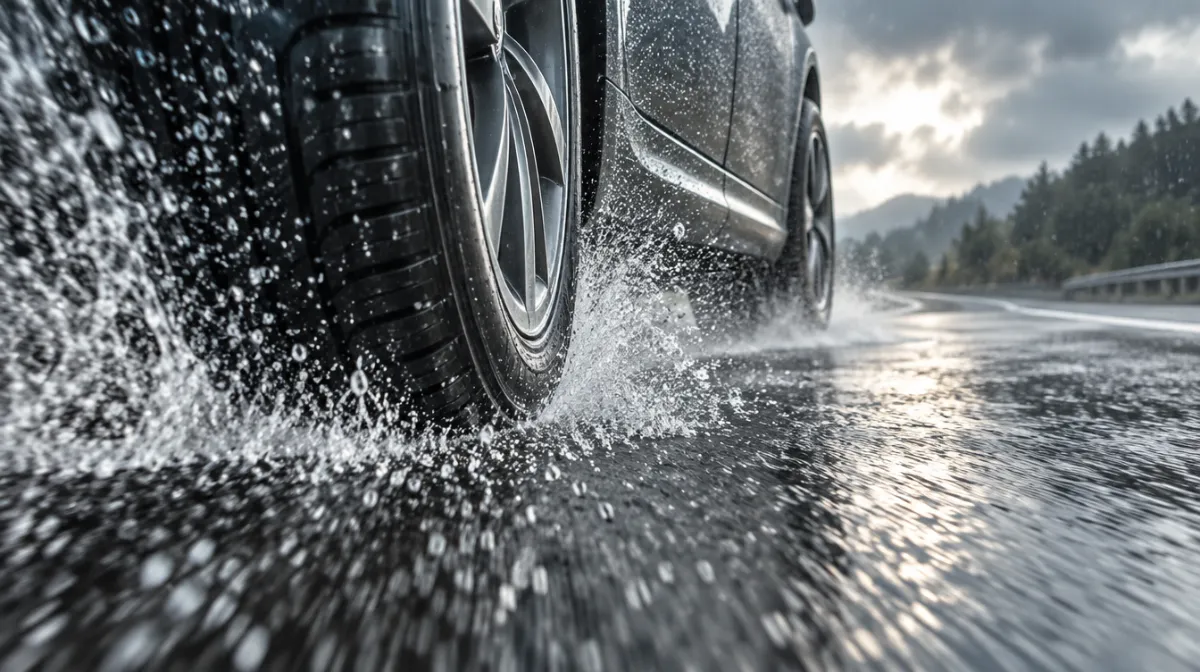
Friction is the force that resists surfaces sliding over each other. Without it you couldn’t walk, drive or hold a pen; with too much, machines wear out and waste energy.
F = μ × N
| Surfaces | Approximate μ (kinetic) |
|---|---|
| Rubber on dry concrete | High (around 0.7 or more) |
| Rubber on wet road | Lower |
| Steel on steel (lubricated) | Low |
| Ice on ice | Very low |
A 20 kg box on a floor with μ = 0.3: N = 20 × 9.81 ≈ 196 N, so friction ≈ 0.3 × 196 ≈ 59 N. You need more than about 59 N to keep it sliding at constant speed.
Walking, tyre grip, brakes, and holding objects. Cornering cars rely on friction for centripetal force.
Wear, heat and wasted energy in engines and machines. Lubricants, bearings and smooth surfaces reduce it; see work, energy and power for efficiency.
Air resistance is a kind of friction with the air; it’s why falling objects reach terminal velocity; see the free fall calculator.
For many everyday situations, friction depends mainly on the materials and normal force, not contact area.
A thin layer of water or disordered molecules on the surface greatly reduces friction.
Yes. It acts where surfaces touch.

Every article is edited by a human and checked against our editorial policy. Spotted a mistake? Tell us.
Newton’s first, second and third laws of motion explained simply, with everyday examples, the F = ma formula, worked problems and common misconceptions.
Kinetic and potential energy explained: formulas, units, everyday examples, energy conversion on roller coasters and pendulums, and a quick energy calculator.
Momentum explained simply: p = mv, conservation of momentum in collisions and explosions, impulse and why crumple zones and airbags work, with worked examples.